The screen is half the image. A good projector on a bad surface looks bad; a decent projector on a good screen looks far better than its price suggests. Here is how to choose.
Screen materials, translated
- Matte white (gain 1.0): the neutral default. Accurate colors, wide viewing angles. Best for dark rooms.
- Gray: deepens blacks and adds perceived contrast, which helps if your projector's black levels are mediocre or the room is not pitch dark.
- ALR (ambient light rejecting): optically rejects off-axis room light. Genuinely effective in living rooms, but expensive, with narrower viewing angles. Standard-throw ALR pairs with standard projectors; UST ALR (lenticular) is made for ultra short throw units and does not work well with standard throw.
- Gain above 1.0: brighter image, but with hot-spotting and narrower viewing angles. Rarely worth it for home use.
Formats
- Fixed-frame: a perfectly flat, tensioned surface, which means the best image quality. Needs a dedicated wall.
- Pull-down / motorized: disappears when not in use. Great for living rooms; make sure it is tab-tensioned or expect waves over time.
- Floor-rising: rises out of a case on the floor, no wall or ceiling mounting needed. A clean look for living rooms where you cannot mount anything.
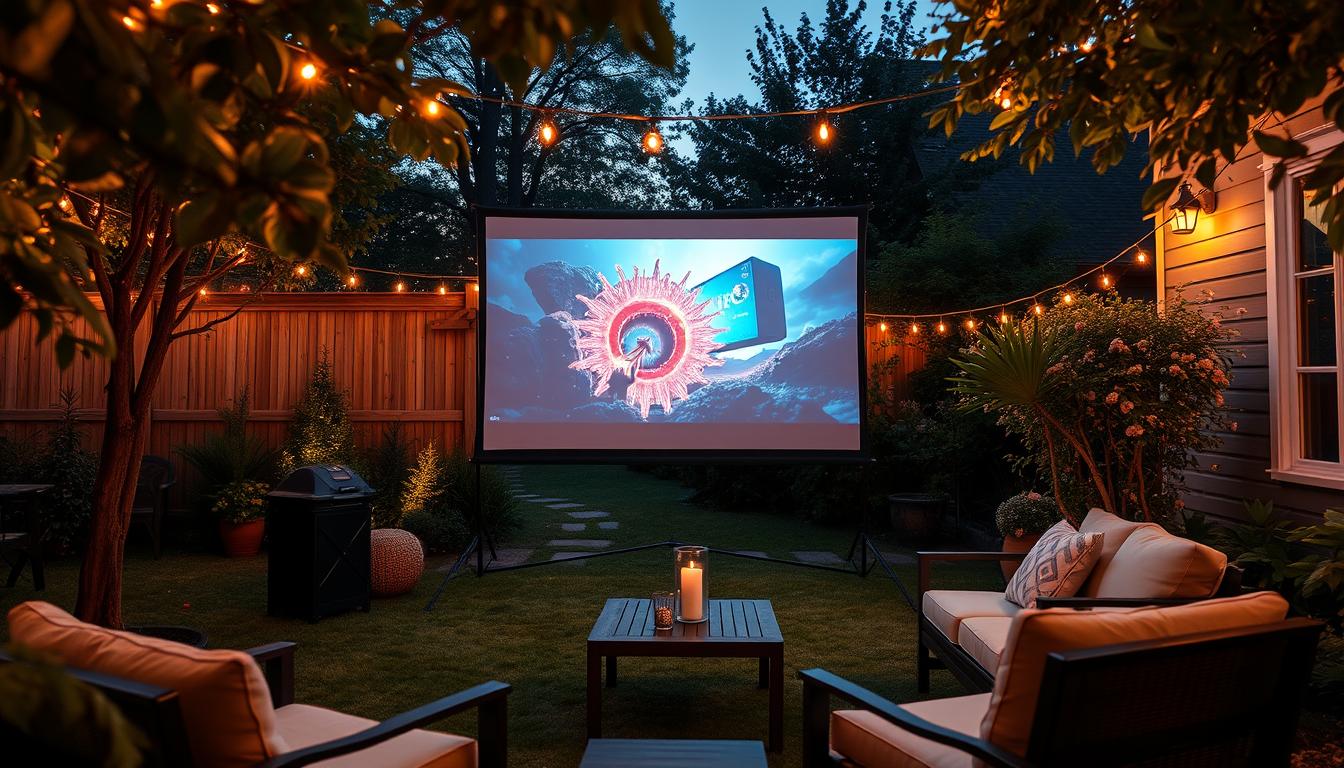
- Portable / tripod: for backyards and travel. Fine for fun, not for critical viewing.
- Paint: special screen paint on a smooth wall lands between a bare wall and a real screen. Only worth it with proper prep.
When a plain wall is fine
A smooth, matte, neutral-white or light-gray wall is a perfectly respectable screen for casual viewing, especially while you decide on size. What ruins it: texture, color tint, and sheen. If your wall is orange-peel textured or eggshell, a real screen is a bigger upgrade than a brighter projector.
Sizing
Pick screen size from your seating distance and your projector's throw range, not from ambition. A good starting point is sitting back about one and a half to two times the screen width. Our calculator does the math both ways.
Disclosure: As an Amazon Associate, I earn from qualifying purchases.
Where I would start: I keep a curated
indoor screen idea list with the fixed-frame, pull-down, and ALR screens I actually recommend. If you are shopping for a living room with windows, start with the ALR options on that list.
Want a second opinion on screen type for your room? Book a consultation.